

In January I spent several days at PPAI Expo in Las Vegas, which PPAI calls the industry’s largest and longest-running trade show. I went with a promotional products company I work with, mostly because clients have asked me where merch belongs in a serious brand and go-to-market plan, and I wanted a better answer than taste. A show floor that size is an odd place to think about restraint. Every aisle is built to make you stop and pick something up, and the sheer volume on offer makes the question of what anyone will keep feel very far away.
The conventional way to think about promotional products treats them as a line item attached to an event. You order enough to cover the booth and count what went out the door. Under that logic volume is the goal, and a lower unit cost is a win. It’s an understandable logic for whoever owns the budget, because a count of items distributed is easy to report and an empty box at the end of a conference looks like success.
What the show pointed toward
The direction that stood out most to me this year was restraint. The strongest pieces looked closer to retail than to giveaways, with better materials and quieter branding, and they were things a person might plausibly buy for themselves. PPAI’s own consumer research, published a few weeks before the show, found that people want fewer promotional products that are better designed and more meaningful. I read that as a correction in the market, one that has been building for a while. An object that doesn’t fit into someone’s day gets thrown out however clever the logo is, and its cost was spent the moment it was printed.
Restraint has limits as a rule, though. The company I attended with told me about a client who has repeatedly ordered oversized, bright yellow rulers. They’re impractical and conspicuous, and people joke about them. People also stop to ask where they came from, and that question is the conversation the client wants to start in a crowded room. For a business whose problem is being noticed, a tasteful notebook would have failed quietly. What the rulers and the retail-grade pieces share is fit: each is matched to what the object is supposed to do, which is a harder standard than good design.
The moment around the object
Much of what I saw on the floor was experiential, with personalization done live at the booth and items tied to a specific interaction. Customization is old news in this industry. What the live format makes visible is that an object’s meaning comes from the moment it belongs to. The same item reads differently when it arrives during onboarding or follows a real conversation, and without a moment of that kind it is clutter on a desk. Local soccer clubs understand this well, and I’ve written about how merch becomes part of a local identity there.
Merch as infrastructure
This is where I find the more useful frame. When merch works over time, it is usually attached to something an organization already does on purpose, such as onboarding new hires, running an account-based program or tending a partner relationship. In that position it behaves like infrastructure. It carries a message the system was already designed to deliver, and it can be judged against that purpose. The questions that matter come before anyone opens a catalog, starting with who the item is for and what they should remember when they find it later.
Ownership is where that frame tends to get tested. When merch belongs to whoever has the next event, each order is reasonable on its own terms, and the pattern across a year is impossible to read. Sourcing has become part of the same decision; I’ve written separately about what has changed in holiday merch planning, where lead times and tariffs now shape what is possible at all. Treating merch as infrastructure means someone has to hold the whole picture, which makes it an organizational question as much as a creative one.
The socks in the drawer
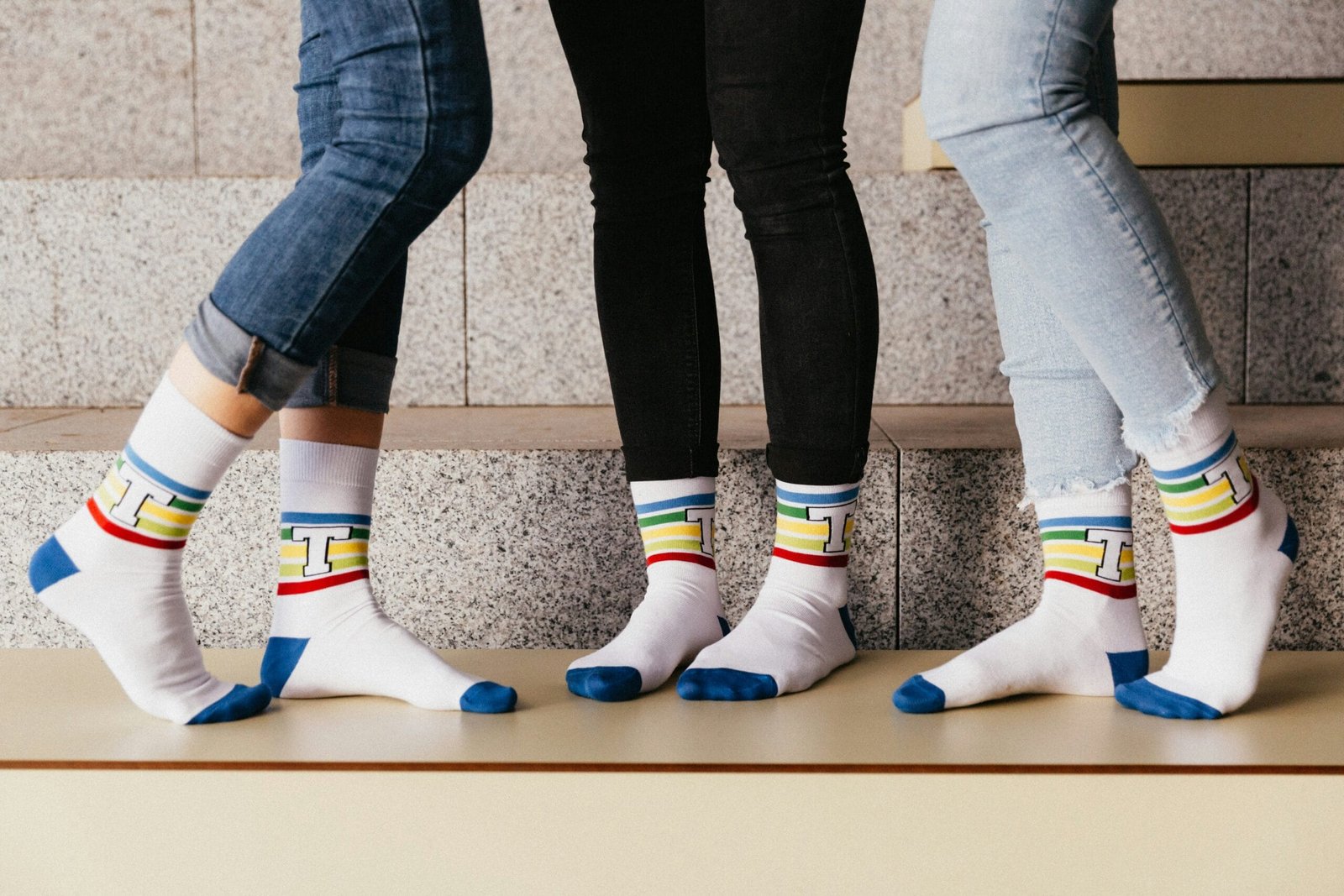
Years ago at Funnelback, during an early account-based marketing effort, we sent custom socks to a small group of prospects, back when branded socks were still unusual. Five years later one of those prospects called. They had found the socks in a drawer and remembered the company, and by then they had budget and were ready to move forward. The socks were ordinary socks. They worked because the audience was small and deliberate, and because the object stayed in someone’s life long enough to outlast the campaign that sent it.
That story doesn’t fit neatly into an event budget, since the return arrived years after anyone was measuring. The show floor in Las Vegas was full of objects designed to be noticed in passing. I left wondering what merch would look like if it were planned and measured on the timeline where it does its best work, and whether most organizations have anyone positioned to see that far.